
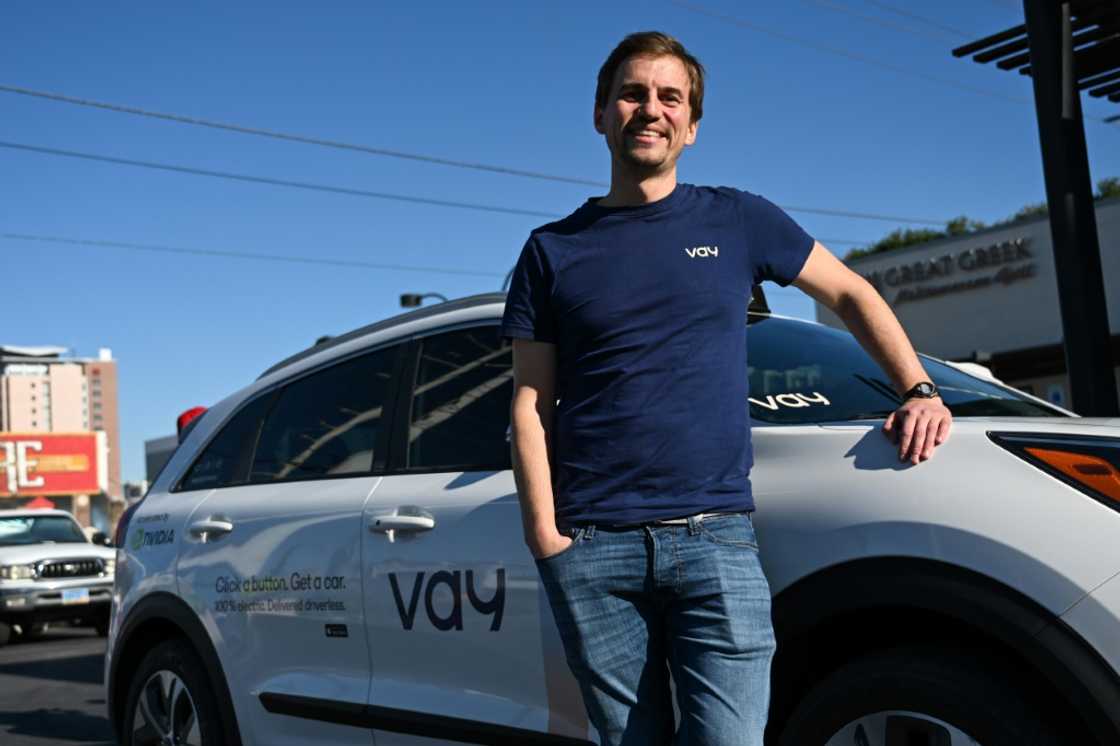
With no human in the driver's seat, the SUV behind the wheel looks like an autonomous robotaxi, like those becoming increasingly common in some cities, but the car from the German startup Vay is something distinct.
One of the numerous entities striving to disrupt land transportation, the seven-year-old company revolves around remote driving, where a human plays a significant role, albeit from an office setting, using television monitors to navigate the vehicle.
Over the past 12 months, individuals in Las Vegas have had the opportunity to pilot Vay, while the company showcased its technology prior to the Consumer Electronics Show (CES), a significant global technology exhibition.
Thomas von der Ohe, the chief executive and co-founder of Vay, stated that his method is a lower-cost approach, "which has nothing to do with autonomous driving".
Von der Ohe, who previously worked at Zoox, the Amazon-owned autonomous driving company, said that unlike autonomous driving companies, Vay doesn't have to carry out "massive amounts of simulations" to be safe.
"We designed our system to prioritize human judgment and decision-making," he said.
Unlike a Tesla or Waymo, there is no ambition at Via of one day relinquishing the steering wheel, which twists and turns during rides as if manually controlled by an unseen driver.
This approach uses relatively cheap camera technology, costing a tiny portion of the prices of the Lidar sensing systems highly valued by prominent autonomous vehicle companies.
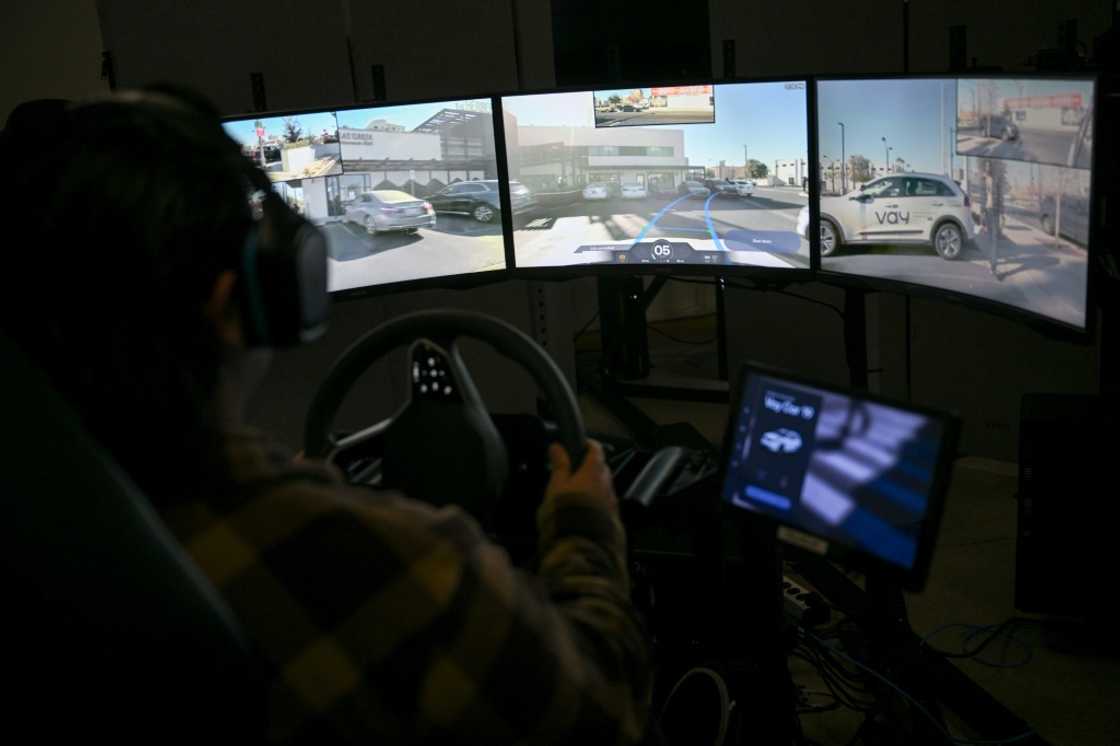
A demonstration of the remote driving technology showcased someone viewing three screens that displayed live images from front, side, and rear-view cameras as they operated a system similar to home racing simulators, with a steering wheel and pedals.
Vay is offering rides at half the cost of Uber or Lyft. Reed von der Ohe expects the company to become profitable within the next one or two years, contingent upon its ability to expand quickly.
Von der Ohe stated that Vay's Las Vegas fleet, which was launched 12 months ago, has increased from two to 30 vehicles. In that time, the company has successfully completed 6,000 rides.
Von der Ohe believes the company's key revenue source won't be ride-hailing, but rather the delivery of vehicles to consumers who then drive them.
In this manner, Vay functions similarly to a car rental company.
Since the launch in Las Vegas, some customers have ordered up model V vehicles for home delivery and then driven them away.
"This suggests that "we believe this can be a viable substitute for private cars," said von der Ohe



0 Comments