
It's a task that many individuals strongly dislike.
Loading your dishwasher is about to become significantly more convenient, thanks to new guidance from Which?.
Unfortunately, I don't see any text provided. Please provide the original text about loading a dishwasher, and I'll be happy to assist you with paraphrasing it into International English.
From setting your dinner plates in the middle of the table, to getting your dishes confused with your serving bowls, it appears that you have likely been doing it incorrectly all along.
One of the key things our guide finally puts to rest is the long-standing question of whether or not you should be pre-rinsing your dishes.
"The way you load your dishwasher can significantly impact how efficiently it cleans larger items and heavily soiled utensils," Which? explained.
Are you currently using the most effective method for loading your dishwasher?
Here's what Which? says you should be doing in your kitchen:
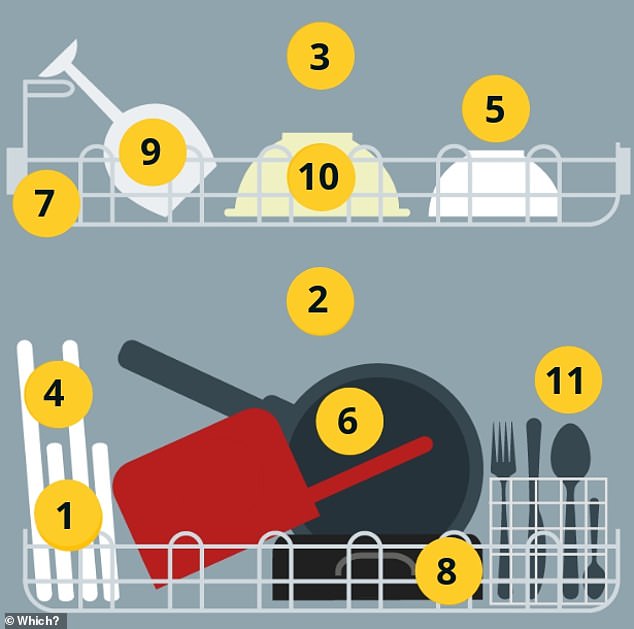
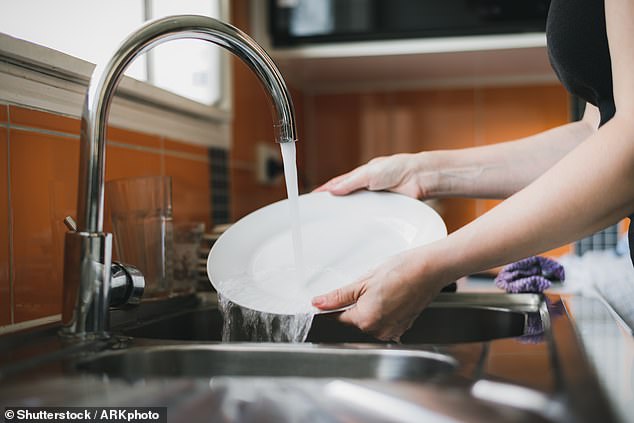
1. Please, do not rinse your plates.
Contrary to what many people think, according to the experts at Which?, it's actually best not to rinse your plates before loading them into the dishwasher.
'Loading the dishwasher without first removing visible food residue may prevent it from effectively cleaning your dishes.'
'But most dishwasher programs will pre-rinse your dishes, so there is no need to run them under the tap – it's a wasteful use of water.'
2. Arrange your plates with their fronts directed toward the center.
According to Which?, the dirty side of each dish should face the middle of the dishwasher rack.
The jet spray from the dishwasher arms comes out like a garden sprinkler, so ensure it isn't blocked or facing away from the dishes.
There's no text provided. Please provide the text to be paraphrased.
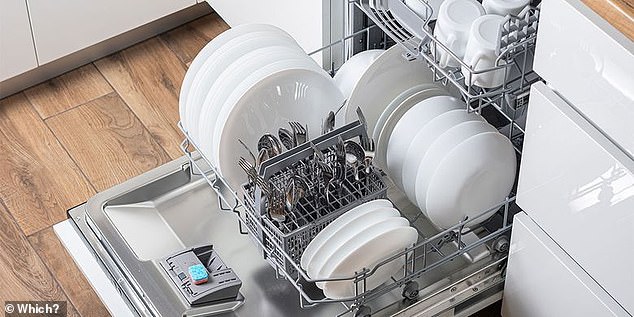
You may be inclined to pile all your dirty dishes into the dishwasher at once, however, Which? advises against overloading the dishwasher.
"It is recommended to stick to the spaces provided in the dish racks and cutlery baskets," it explained.
'Overloading your dishwasher may hinder its ability to effectively clean all the dishes.'
4. Mix utensils and serving dishes
According to which, instead of stacking plates at one end and placing bowls at the other, it's recommended to mix your plates and bowls together in the dishwasher.
'Leaving space between dishes and utensils allows water and detergent to spread around,' Which? said.
To address this, you can try arranging larger and smaller plates respectively on a same table setting, allowing you to find a more comfortable volume range for holding food portions.
Unfortunately, there is no provided text to paraphrase.
Ensure your bowls are facing downwards, or you might be surprised when you open your dishwasher and find them still filled with water.
6. Position heavy objects against the wall to avoid cluttering the center and leave sufficient space to move around comfortably.
Regardless of whether it's a baking sheet or a fruit bowl, make sure you place any large items at the back and sides of the dishwasher.
'This will prevent them from interfering with the flow of water and detergent, preventing other dishes from getting clean,' the organization said.
Use adjustable shelving units or pegboards to efficiently organize and store bulkier items.
If your dishwasher has an adjustable top rack, this can be useful for fitting in large items or long-stemmed wine glasses, as According to a British consumer organization.
You can check if your dishwasher has an adjustable upper rack by looking for a lever on the sides, as recommended by Which?.
'Some also use a slide system that necessitates the removal of the basket and readjustment of the runners.'
Place the oven racks at the bottom.
For optimal results, position your roasting trays on the oven's bottom rack, where the water pressure and temperature are most concentrated.
Which added: 'Some dishwashers have a separate spray head for heavy-duty tasks such as this.'
9. Arranges glasses on the side and positions mugs in the center
For proper placement of all cups and glasses, Which? recommends exercising careful consideration as to where each vessel is situated.
'If possible, place the glasses on the side supports as the water jet isn't very strong here. Cups and mugs can be placed in the middle,' it said.
Place corresponding plastic items on the top rack.
The magazine suggests keeping any plastic items in the dishwasher's top rack.
"The temperature here is lower, which means they are less likely to warp or become misshapen due to the heat," it explained.
This tip is about rearranging the typical orientation of the cutlery. Begin by placing your spoon on the right side of your plate and your knife to the left. The inverted attachment point (fork or knife tip) will then serve as the anchor point for the combined cutlery item.
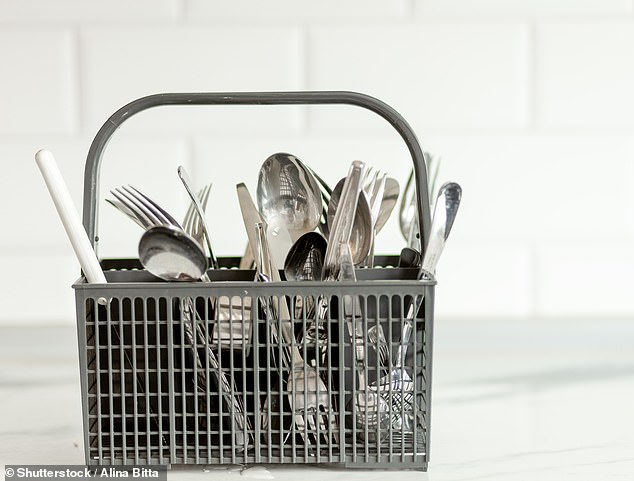
According to Which?, stacking your cutlery in a way that alternates between utensils with opposing handles is recommended to prevent "nesting".
The reason your cutlery doesn't always get clean might be because items of the same type are sitting too close together, preventing the water from reaching them properly.
This issue, known as nesting, occurs when spoons clamp into each other.
To resolve this, arrange some standing upright and some inverted, allowing water to flow over all surfaces.
'Knives are the exception to this rule. It is safer to load them point downwards.'
Read more



0 Comments